


Camping food often gets a bad reputation. People imagine cold beans, burnt hot dogs, or expensive freeze-dried bags that taste like cardboard.
But eating outdoors should be the highlight of your trip. Everything tastes better when you cook it over a fire or a camp stove after a long day of hiking.
You do not need a massive kitchen or fancy equipment to eat like a king. You just need a solid plan and a few smart tricks to turn simple ingredients into a feast.
The Golden Rule: Prep at Home
The biggest mistake beginners make is bringing raw, whole ingredients to the campsite. Trying to chop an onion on a flimsy plastic table in the wind is a nightmare.
Do the hard work in your kitchen before you leave. Wash your vegetables. Chop your peppers and onions. Marinate your meats.
Store everything in labeled zipper bags or sealed containers. When it is time to cook, you simply dump the ingredients into the pan. You save time, reduce trash at the site, and keep your hands clean.
Building Your Camp Kitchen
You do not need to bring every pot you own. A simple setup works best.
The Stove
A two-burner propane stove is the standard for car camping. It gives you control over the heat, just like your stove at home. You can boil water on one side while frying eggs on the other.
Cookware
Bring one large cast-iron skillet and one medium pot. Cast iron holds heat incredibly well and is almost impossible to destroy. You can put it directly on a campfire grate or use it on your gas stove.
Essential Tools
Pack a sharp knife, a cutting board, a spatula, and a pair of tongs. Do not forget a can opener and a lighter. Keep these items in a dedicated plastic bin so they never get lost.
Packing the Cooler
A soggy sandwich can ruin your day. Packing a cooler is an art form that keeps your food safe and appetizing.
Chill It First
Bring your cooler inside the house the night before. If you put cold food into a hot plastic box, the ice melts instantly. Pre-chill the cooler with a bag of sacrifice ice or frozen water bottles.
Layer Correctly
Put block ice on the bottom. It lasts much longer than cubes. Place raw meat directly on the ice, sealed tightly to prevent cross-contamination.
Layer your drinks and hardy vegetables next. Put delicate items like eggs, cheese, and soft produce on the very top.
Freeze Your Drinks
Freeze gallon jugs of water or juice boxes. They act as ice packs to keep your food cold. As they melt, you have cold water to drink. This saves space and money.
Breakfast Ideas
Start your day right. You need fuel for hiking, swimming, or just relaxing.
The Classic Scramble
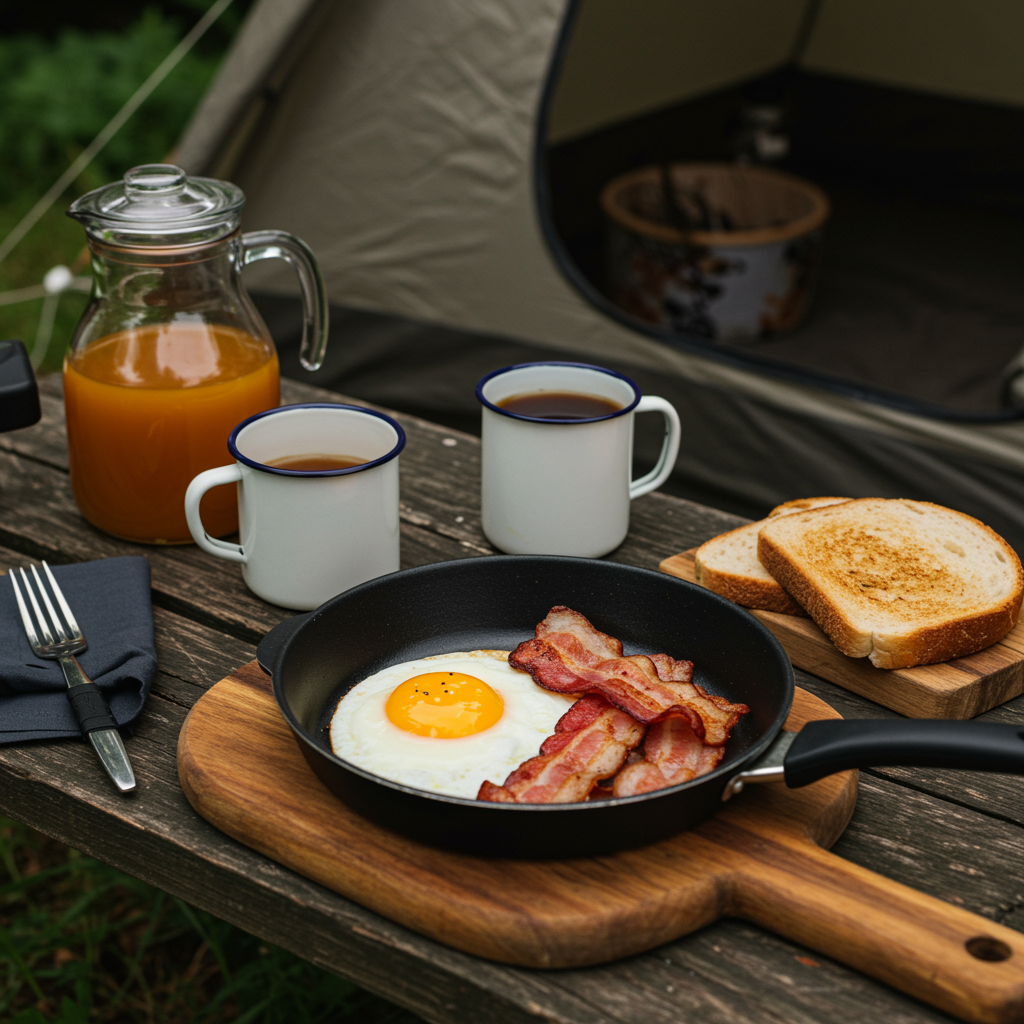
Eggs are cheap and packed with protein. Crack them into a plastic water bottle before you leave home. This prevents them from breaking in the cooler. Just shake the bottle and pour into the pan. Add your pre-chopped veggies and cheese.
Oatmeal Upgrade
Instant oatmeal is easy, but boring. Add peanut butter, dried fruit, nuts, or chocolate chips. It sticks to your ribs and keeps you warm on chilly mornings.
Coffee is Mandatory
Do not skip the caffeine. A French press is fragile but makes great coffee. For a durable option, use a Moka pot or a simple pour-over cone that sits on your mug.
Lunch on the Go
Most campers do not want to stop and cook a full meal in the middle of the day. Keep lunch simple and ready to eat.
The Wrap Station
Tortillas last longer than bread and do not get squished. Fill them with hummus, cucumbers, and peppers, or go with cold cuts and cheese.
Ploughman’s Lunch
This is the ultimate no-cook meal. Put out a spread of hard salami, sharp cheddar cheese, crackers, apples, and pickles. Everyone grabs what they want. It feels fancy but requires zero effort.
Dinner: The Main Event
This is when you can show off. You have time to sit around the fire and enjoy the process.
Foil Packet Meals
These are perfect for groups. Chop potatoes, sausage, corn, and onions. Wrap them in heavy-duty aluminum foil with butter and spices.
Throw the packets directly onto the hot coals of your fire. Rotate them occasionally. After 20 minutes, you have a hot, delicious meal with absolutely no pots to clean.
One-Pot Chili or Stew
Make a big batch of chili at home and freeze it in a bag. At camp, simply dump it into your pot and reheat it. Serve with cornbread or chips. It warms you up instantly when the sun goes down.
Fire-Roasted Kebabs
Skewers are fun and customizable. Alternate chunks of steak or chicken with peppers, onions, and mushrooms. Marinate them at home for maximum flavor. Grill them over the fire grate for that smoky taste.
Snacks and Hydration
You burn more calories outdoors than you do sitting in class or at a desk. You need to snack frequently to keep your energy up.
Trail Mix
Make your own. Mix nuts, seeds, dried fruit, and chocolate. It provides healthy fats and quick sugar. Avoid the pre-made bags that are mostly candy.
Fruit
Apples and oranges are durable. Bananas bruise easily, so eat them first. Fresh fruit tastes incredibly refreshing after a salty freeze-dried meal.
Water
Drink before you feel thirsty. If you are sweating, you are losing electrolytes. Add a pinch of salt to your food or use hydration tablets in your water bottle to prevent headaches.
Food Safety and Wildlife
You are a guest in nature. Animals love human food, from squirrels to bears.
The Clean Camp Rule
Never leave food unattended. If you walk away from the table, put the food in the cooler and lock the car.
Nighttime Storage
All food, trash, and toiletries (toothpaste smells like food to a bear) must go inside your vehicle or a bear-proof locker at night. Never bring food into your tent.
Washing Up
The meal is over, and now you have dirty dishes. Do not wash them in the river or lake. Food scraps pollute the water and hurt aquatic life.
The Three-Bucket Method
Use three small tubs. One for warm soapy water. One for a clean rinse. One with a drop of bleach or sanitizer for the final dip.
Scrape all food scraps into a trash bag before washing. Strain your dishwater to catch any remaining bits, then scatter the gray water 200 feet away from your campsite.
Final Thoughts
Great camping food brings people together. There is something primal and satisfying about sharing a hot meal under the stars.
Start with simple recipes. As you get more comfortable with your stove and your fire, you can try more complex dishes. But even a simple grilled cheese tastes like a masterpiece when you eat it in the fresh air.