


Your camping tent determines whether you love or hate the outdoors. If it leaks, collapses in the wind, or feels like a coffin, you will likely pack up early and vow never to return.
But the right shelter transforms a trip. It becomes a cozy retreat where you play cards during a rainstorm or sleep late after a long hike.
We wrote this guide to help you navigate the confusing world of specifications, shapes, and materials. You do not need the most expensive gear to have a great time, but you do need to know what you are buying.
Understanding Tent Capacity
New campers often fall into a common trap regarding size. You see a box that says “4-Person Tent” and assume it fits four adults comfortably.
This number actually refers to how many sleeping pads fit on the floor if they are touching each other wall-to-wall. It does not account for your backpacks, your boots, or your personal space.
The Sizing Rule of Thumb
Always size up by at least one person for a comfortable fit. If two people are camping, buy a 3-person tent. This gives you extra room for gear and lets you move around without elbowing your partner.
For families or groups who want luxury, size up by two. A 6-person tent is the sweet spot for a family of four who wants to sleep on air mattresses and store clothes inside.
Choosing the Right Shape
The geometry of your tent affects how it handles wind, rain, and interior space.
Dome Tents
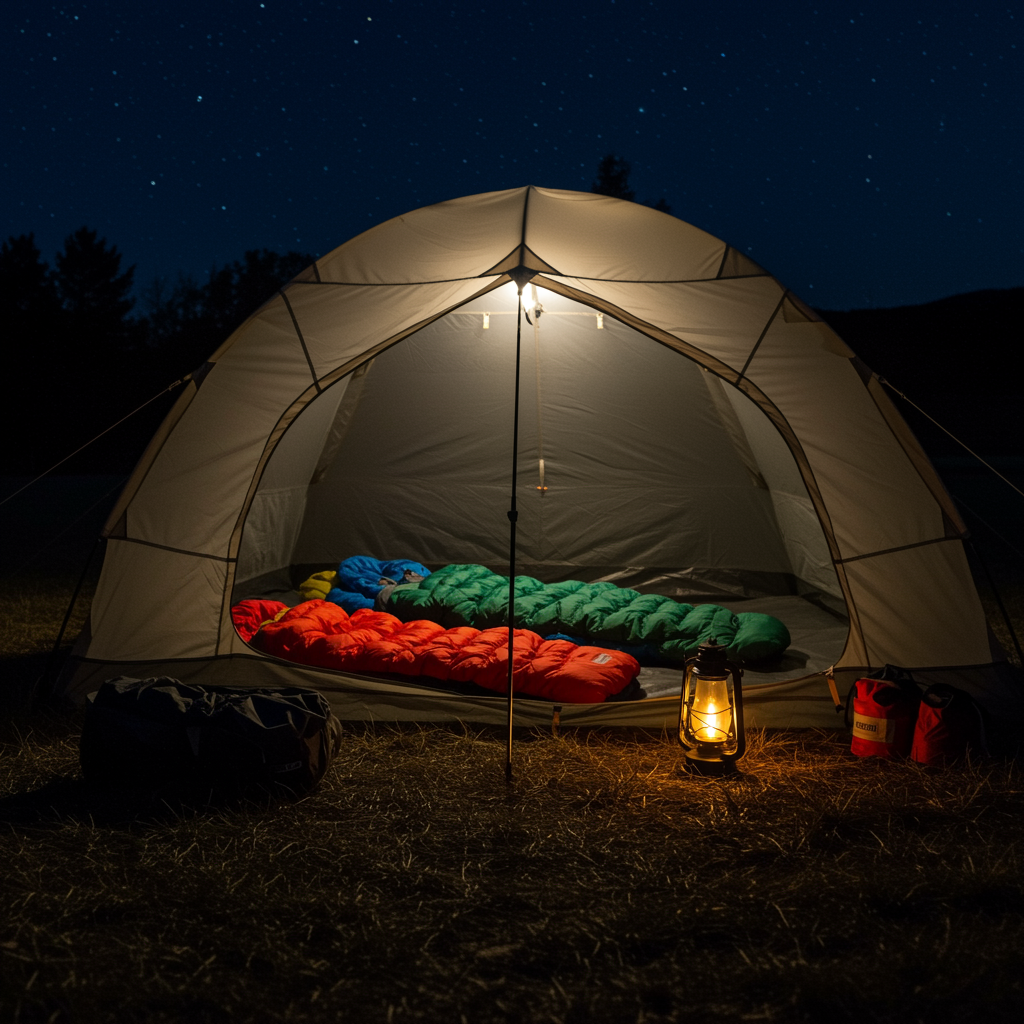
This is the most common shape for a reason. Two poles cross in the middle to create a strong, simple structure. They handle wind well because the shape sheds gusts easily. They are usually lighter and cheaper, making them perfect for students and beginners.
Cabin Tents
These feature nearly vertical walls. You get maximum headroom and livable space. You can often stand up inside to change clothes. However, they catch the wind like a sail. Use these for car camping in mild weather, but avoid them if a storm is coming.
Tunnel Tents
These use parallel hoops to create a long tunnel shape. They offer great space-to-weight ratios but rely heavily on stakes to stay upright. If the ground is too rocky for stakes, you cannot set this tent up.
Seasonality Explained
You will see tents rated by seasons. This is not about the time of year, but rather the weather conditions the tent can handle.
3-Season Tents
This covers 90% of campers. These tents handle spring, summer, and fall. They have plenty of mesh for ventilation to keep you cool and manage condensation. They can withstand heavy rain and light wind.
4-Season Tents
Do not buy these unless you camp in winter or high mountains. They are built for snow loads and high winds. They use heavy fabrics and have very little mesh. If you use one in the summer, you will roast inside.
Weatherproofing and Materials
A dry tent is a happy tent. Manufacturers use specific terms to describe how waterproof a tent is.
Hydrostatic Head
You might see a rating like “1500mm” or “3000mm.” This measures how much water pressure the fabric can take before it leaks. For normal camping, 1500mm is sufficient. If you expect heavy storms, look for higher numbers.
The Rainfly
This is the waterproof outer layer that goes over the tent body. A “full-coverage” rainfly reaches all the way to the ground. This offers the best protection against sideways rain and creates a vestibule for gear storage.
Cheaper tents often have a “hat” style rainfly that only covers the very top. These are fine for backyard camping but risky for real trips.
Seams and Zippers
Check the seams. They should be “taped,” meaning a clear strip of waterproof material is glued over the stitching. If you see tiny needle holes with no tape, water will get in.
Setting Up Like a Pro
You bought the gear. Now you need to use it correctly. A bad pitch makes even a $500 tent perform poorly.
Find Flat Ground
Clear the area of rocks, pinecones, and sticks. These items will poke holes in your floor and ruin your sleep. If you are on a slope, position the tent so your head is uphill.
Use a Footprint
A footprint is a ground cloth that goes under your tent. It protects the floor from abrasion and dirt. You can buy the specific one for your model or just use a cheap blue tarp. Tuck the edges under the tent so rain does not pool between the layers.
Guy Out Your Lines
Those extra ropes hanging off the rainfly are not decorations. They are guylines. You must stake them out tight. They give the tent structural integrity in the wind and pull the fabric tight to prevent water from pooling.
Managing Condensation
You wake up and the walls are wet. You think the tent leaked, but it probably didn’t. This is condensation from your breath and body heat hitting the cold tent fabric.
Ventilation is Key
You must keep air moving. Open the roof vents. Unzip the top of the door slightly if possible. Even when it is cold, you need airflow to carry moisture away.
Store Wet Gear Outside
Do not bring wet boots or rain jackets inside the main sleeping area. The evaporating water has nowhere to go. Keep them in the vestibule (the covered area outside the door).
Maintenance and Storage
Good tents last for years if you treat them right. The biggest enemy of tent fabric is mildew.
The Golden Rule
Never store a wet tent. If you must pack it up wet to drive home, set it up again in your yard or garage immediately. Let it dry completely before rolling it up for storage.
Shake It Out
Before you pack up, unzip the doors and turn the tent upside down. Shake out the dirt, sand, and dead bugs. Grit acts like sandpaper and wears down the waterproof coating over time.
Be Gentle with Zippers
Zippers are usually the first thing to break. Use two hands to operate them. One hand pulls the zipper, and the other holds the fabric taut. If fabric gets stuck, do not yank it. Back it up gently.
Budget vs. Premium
You do not need to spend a fortune to start.
The Budget Route
Big-box store tents are fine for summer weekends. They use heavier materials (fiberglass poles instead of aluminum), but they work. Treat them gently, and they will serve you well for casual trips.
The Investment
If you plan to camp monthly or hike long distances, spend more. Premium tents use aluminum poles which are lighter and stronger. They use advanced fabrics that pack down smaller. You are paying for durability and weight savings.
Final Thoughts
Your camping tent is your sanctuary. It protects you from bugs, rain, and wind. Take the time to practice setting it up at home before your first trip.
There is nothing worse than reading instructions by flashlight in the rain. Get comfortable with your gear, and you will sleep soundly wherever you decide to pitch camp.